How does Calnetic protect private company data when integrating AI models?
We deploy AI workflows against private enterprise endpoints on AWS Bedrock, Azure OpenAI, Google Cloud Vertex AI, or dedicated APIs where client prompts and documents are never used to train public models. Vector indices (such as Qdrant or pgvector) and application databases run inside your isolated cloud environment with role-based access control and audit logging.
How do you decide whether a workflow needs AI or standard software rules?
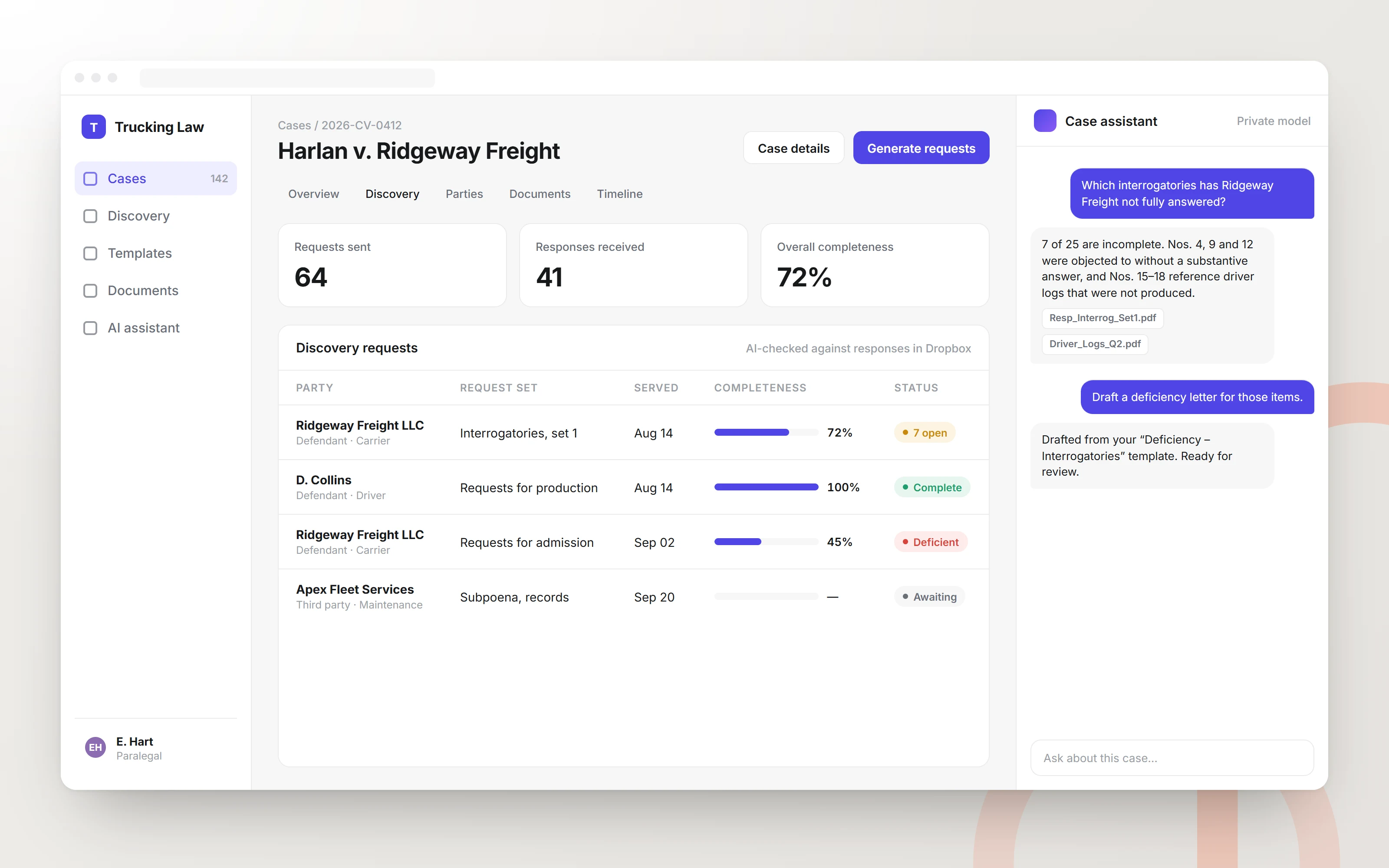
We start from the operational process. Deterministic software code handles financial calculations, permissions, state transitions, and strict compliance rules where 100% repeatability is required. AI models are applied to unstructured work—such as parsing PDFs and legal records, classifying inbound requests, semantic search across repositories, and drafting initial outputs for human review.
Can you integrate AI into our existing legacy software, ERP, or EMR without replacing it?
Yes. Most of our engagements sit alongside working ERP, CRM, EMR, or document storage platforms. We build secure API bridges, webhook listeners, and scheduled data pipelines so AI agents can read context and write structured updates back into your systems of record without a rip-and-replace project.
How do you prevent AI hallucinations in production workflows?
We constrain model outputs using strict JSON schemas, retrieval-augmented generation (RAG) grounded in your verified documents with inline citations, deterministic validation rules, and human-in-the-loop approval queues for high-stakes actions.